The Critical Role of Contact Adhesives in Industrial Success
Key Takeaways
- Instant Bonding: Contact adhesives enable immediate bonding, important for time-sensitive industrial processes.
- Chemical Composition: Their unique mix of polymers, resins, and solvents provides unmatched flexibility and strength.
- Versatility Across Industries: From automotive to aerospace and construction, contact adhesives offer efficient and durable solutions.
- Overcoming Application Challenges: Success with contact adhesives involves precise surface preparation and application techniques.
- Innovation and Advancements: Ongoing development in contact adhesive technology aims to meet industrial demands and environmental standards.
Introduction: Delving into the World of Contact Adhesives
In the complex arena of industrial manufacturing, seemingly small choices often have far-reaching implications. Among these, the role of contact adhesives is particularly noteworthy. These adhesives are not mere tools for joining materials but pivotal components driving efficiency, innovation, and reliability across diverse industries. This comprehensive guide aims to unravel the various facets of contact adhesives, from their chemical makeup to real-world applications, conduct comparative analyses, and address common challenges.
Chemical Composition and Mechanics of Contact Adhesives
Contact adhesives, known for their immediate bonding capabilities, are formulated through a delicate balance of polymers, resins, and solvents. Each component plays a distinct role:
- Polymers, typically derived from elastomers, provide flexibility and strength.
- Resins add tackiness and enhance bond durability.
- Solvents keep the adhesive in a fluid state for easy application, eventually evaporating to allow bonding.
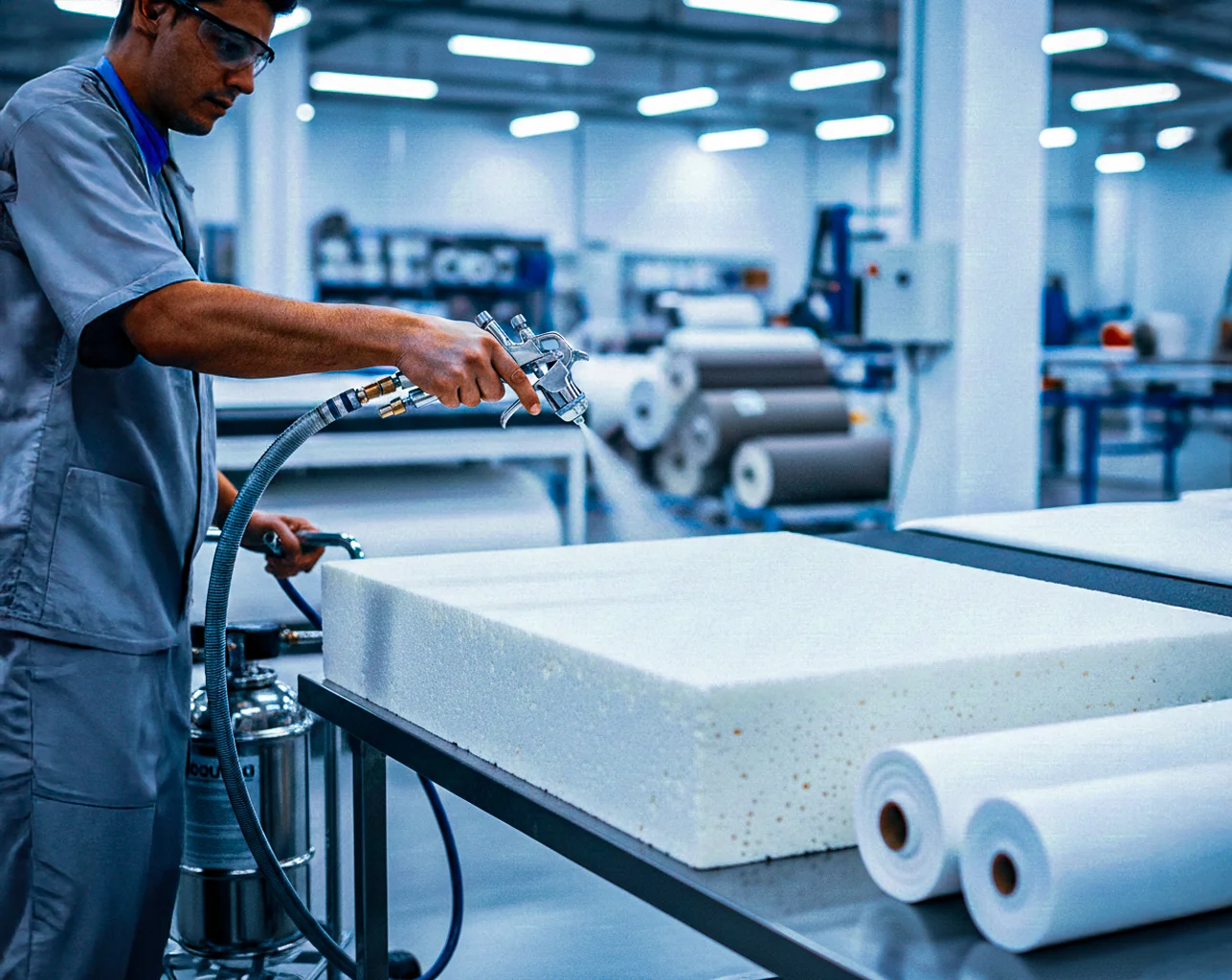
The unique feature of contact adhesives is their ability to bond upon contact, unlike other adhesives that require curing time. This characteristic is particularly valuable in fast-paced industrial environments, allowing for rapid assembly and increased production rates.
Diverse Industrial Applications of Contact Adhesives
In the automotive industry, contact adhesives have revolutionized the assembly process. They facilitate the bonding of different materials, leading to lighter, more efficient vehicles. In aerospace, they are used to bond lightweight composite materials, which is the foundation for the structural integrity and performance of aircraft.
In construction, contact adhesives are needed for applications ranging from installing flooring and panels to insulation and roofing. Their ability to withstand environmental stressors ensures the longevity and safety of structures.
Comparative Analysis: Contact Adhesives Vs. Other Types
When compared to other adhesives like epoxies, silicones, or hot melts, contact adhesives offer a unique combination of rapid bonding, strength, and versatility. While epoxies are renowned for high strength and chemical resistance, silicones excel in extreme temperatures, and hot melts offer quick setting times for light-duty applications, contact adhesives provide a reliable and efficient solution for a wide range of materials and environments.
Navigating Challenges in Contact Adhesive Applications
Implementing contact adhesives in industrial settings involves overcoming certain challenges. Surface preparation is key to effective bonding, with contaminants potentially weakening the adhesive’s performance. The technique of application, including maintaining the right open time and applying the correct amount, is important in achieving optimal bond strength. Environmental factors like temperature and humidity can also affect the adhesive’s behavior, necessitating careful consideration during application.
Advanced Techniques and Innovations in Contact Adhesive Technology
Continual advancements in contact adhesive technology are leading to more specialized and environmentally friendly formulations. These innovations are tailored to meet specific industrial needs, such as increased temperature resistance or reduced environmental impact.
Real-World Case Studies: Contact Adhesives in Action
Illustrating the impact of contact adhesives through case studies from industries like automotive, aerospace, and construction can provide deeper insights into their practical applications and benefits. These case studies highlight how contact adhesives contribute to process efficiencies, product improvements, and innovative solutions in challenging industrial scenarios.
Future Prospects: The Evolving Role of Contact Adhesives
Looking ahead, the role of contact adhesives in industrial success is poised to grow. With industries continually evolving and new challenges emerging, the versatility and efficiency of contact adhesives make them indispensable in future advancements and innovations.
Conclusion: The Indispensable Nature of Contact Adhesives
In summary, contact adhesives are much more than bonding agents; they are key enablers of industrial success. Understanding their properties, applications, and the solutions they offer is essential for any industry professional looking to achieve efficiency, innovation, and reliability in their projects.
Call to Action
For those in the industrial sector seeking expert solutions and guidance in adhesive technologies, our team is equipped to provide comprehensive support and innovative solutions tailored to your specific needs. From addressing complex assembly challenges to ensuring durability and efficiency, our expertise in the field of adhesives can play a critical role in the success of your projects. Contact our team for personalized advice and to explore how our advanced adhesive solutions can contribute to your industrial achievements.
FAQs
1. What sets contact adhesives apart from other types of adhesives in industrial use?
Contact adhesives are distinguished by their instant bonding capability without the need for curing time, which is unlike other adhesives that might require several minutes to hours to set. This quality is derived from their unique chemical composition, primarily consisting of polymers for elasticity and strength, resins for tackiness and durability, and solvents for application ease. Once the solvent evaporates, the adhesive becomes tacky, allowing for immediate and robust bonding upon contact. This immediate set time is critical in industrial manufacturing, as it accelerates assembly lines and increases production rates. Furthermore, contact adhesives are versatile enough to bond a variety of materials and are resilient to environmental stressors, such as temperature and humidity, which is invaluable across multiple industries.
2. How do the chemical properties of contact adhesives influence their performance?
The chemical properties of contact adhesives directly influence their performance by determining their flexibility, bonding strength, and suitability for various environmental conditions. The polymers, typically elastomers, provide the adhesive with flexibility, allowing for movement and expansion of bonded materials without compromising bond integrity. Resins contribute to the tackiness and the immediate bond strength, ensuring that the adhesive holds fast as soon as the two surfaces come into contact. Solvents keep the adhesive fluid for easy application but evaporate after application, leaving behind a tacky substance that can firmly bond materials. This balance of properties is necessary for industrial applications where materials may undergo stress or need to withstand challenging conditions.
3. In what industries are contact adhesives most beneficial, and why?
Contact adhesives are most beneficial in industries where rapid assembly, strong bonding, and resilience to environmental factors are vital. In the automotive industry, they enable the bonding of different materials for lighter, more efficient vehicles. In aerospace, they are used for bonding composite materials that must withstand extreme conditions. In the construction industry, contact adhesives are used for installing floors, panels, insulation, and roofing, where their ability to withstand environmental stressors is paramount for the longevity and safety of structures. The speed at which contact adhesives work is also a significant advantage, allowing for faster completion of projects, which is a key success factor in manufacturing and construction timelines.
4. What challenges must be navigated when implementing contact adhesives in industrial applications?
When implementing contact adhesives in industrial applications, several challenges must be navigated to ensure optimal performance. Proper surface preparation is key; surfaces must be clean and free of contaminants to prevent compromised bonding. The application technique must be precise, with the correct amount of adhesive applied and adequate open time maintained before joining the surfaces. Environmental factors, such as temperature and humidity, can affect the behavior of the adhesive, so adjustments may be necessary to accommodate these conditions. Additionally, the industry is continually seeking more specialized and environmentally friendly adhesive formulations to meet evolving regulatory requirements and sustainability goals.
5. What advancements are being made in contact adhesive technology?
Advancements in contact adhesive technology are focusing on creating more specialized formulations to meet specific industrial requirements. These include adhesives that can withstand higher temperatures, those with greater resistance to chemicals or moisture, and formulations that are environmentally friendlier, with lower volatile organic compound (VOC) emissions. There is also ongoing research to enhance the overall performance, such as improving the strength and longevity of the bond and reducing the potential for adhesive failure under stress. Manufacturers are also looking to improve application methods, making adhesives easier to use while maintaining high standards of safety and efficiency. These innovations are critical as industries evolve and new materials and production methods emerge.
Recent Posts

Need Expert Advice
Our engineering team is ready to help you find the perfect adhesive solution for your application.
Contact an EngineerRecent News & Articles

Elevate Your Performance

Join Our Newsletter
Early access to new product launches and innovations
Exclusive industry insights and technical solutions
Expert tips and best practices for your applications
Follow Our LinkedIn
Stay informed with the latest industry insights & trends
Discover our latest product launches and innovations
Get expert tips and best practices for your applications